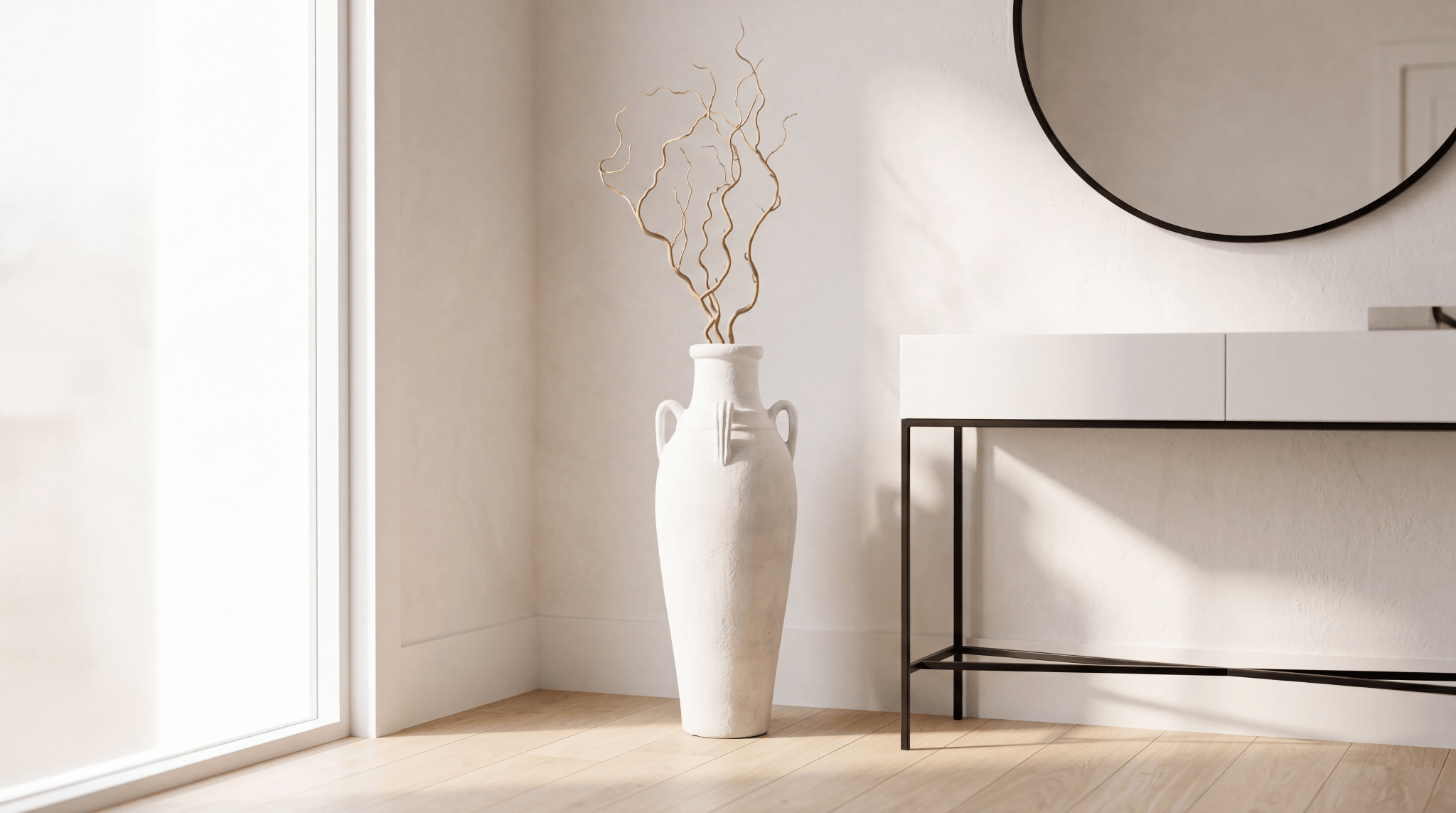
You walk into a room that has every right to feel finished, and yet something is off.
Nine times out of ten, the missing layer is a vase or jar in the wrong scale, the wrong finish, or simply absent. These small pieces carry more weight than people credit them for.
Get the proportions right, and a shelf reads as styled. Get them wrong, and the same shelf reads as cluttered. The difference comes down to material, height, and how a piece sits next to everything around it.
This guide walks through it all, with curated picks for every room.
Key Takeaways
- Vases and jars are foundational decor pieces that shape a room’s visual rhythm, balancing color, scale, and texture in ways larger furniture cannot.
- Material drives the mood. Glass vases for home decor read clean and modern, while ceramic vases for home decor add warmth, weight, and tactile depth.
- Scale separates curated from cluttered. Match vase height to surface size, and group decorative jars and vases in odd numbers to create a natural visual flow.
- Placement is everything. The same flower vase for home use can anchor a centerpiece, fill a corner, or finish a shelf, depending on where you set it.
- Sagebrook Home offers a wide range of materials, finishes, and price points, allowing you to build a collection that grows with your space.
Why Vases and Jars Are Must-Have Decor Pieces
A room without small accents almost always feels unfinished, no matter how good the furniture looks.
Furniture sets the bones, but decorative jars and vases give a space its personality. They catch light at angles other surfaces cannot, hold negative space gracefully, and let you refresh a room without rearranging a single thing.
Then there is the function side. The same vase for home decor can hold fresh peonies one week and dried pampas grass the next, while jars quietly double as storage. That kind of versatility is rare in accent pieces.
What you choose also shapes how the room feels when you walk in. According to a Front Psychol study, interior color choices have measurable links to mood and how people experience a space. Since your vases and jars carry color at eye level, they register first.
Types of Vases and Jars to Know
Now that you know why vases and jars matter, the next step is to understand your options. Each type solves a different styling problem, and the rooms you admire most likely use a mix of two or three.
From classic glass to sculptural ceramic, the main categories of decorative jars and vases each earn their spot for a different reason, and knowing which is which helps you build a collection that works in every room.
Decorative Vases
Some pieces are made to be looked at, not used. Decorative jars and vases lean fully into visual appeal, which is why you see them on shelves, mantels, and entryway consoles, often standing alone as sculptural objects.
Sometimes you fill them with dried botanicals, but plenty look complete on their own.
Flower Vases
A great flower vase for home use does two things at once: it supports the stems and holds the right water depth so your blooms last longer. According to ScienceDirect, vase life is shaped directly by water uptake and stem condition, so the vessel you choose actually matters.
That means your blooms should guide the shape:
- Tall, narrow vases for long stems like roses or lilies.
- Wide-mouth bowls for full bouquets, such as peonies or hydrangeas.
- Bud vases for single tulips or short-stem florals.
Storage Jars
Functional pieces can still earn their place on display, and storage jars are the proof.
You can use them in the kitchen for utensils and dry goods, in the bathroom for cotton rounds, and on your desk for office supplies. The trick is choosing finishes that match your decor, so the function quietly disappears into the styling.
Floor Vases
Once you move past tabletop pieces, floor vases become the next layer. These statement-sized vessels belong in corners, entryways, and beside large furniture, where they add height without competing with the art on your walls.
You can fill them with:
- Tall branches for organic texture
- Faux florals for year-round impact
- Nothing at all, if the silhouette is sculptural enough
Bud Vases
Bud vases are the smallest pieces in the family, yet they often deliver the biggest impact. You can slip one onto a nightstand, line three across a dining table, or cluster five on a coffee tray. Since their scale is so forgiving, you get to experiment with arrangements you would not attempt in larger pieces.
Choosing the Right Material for Vases and Jars
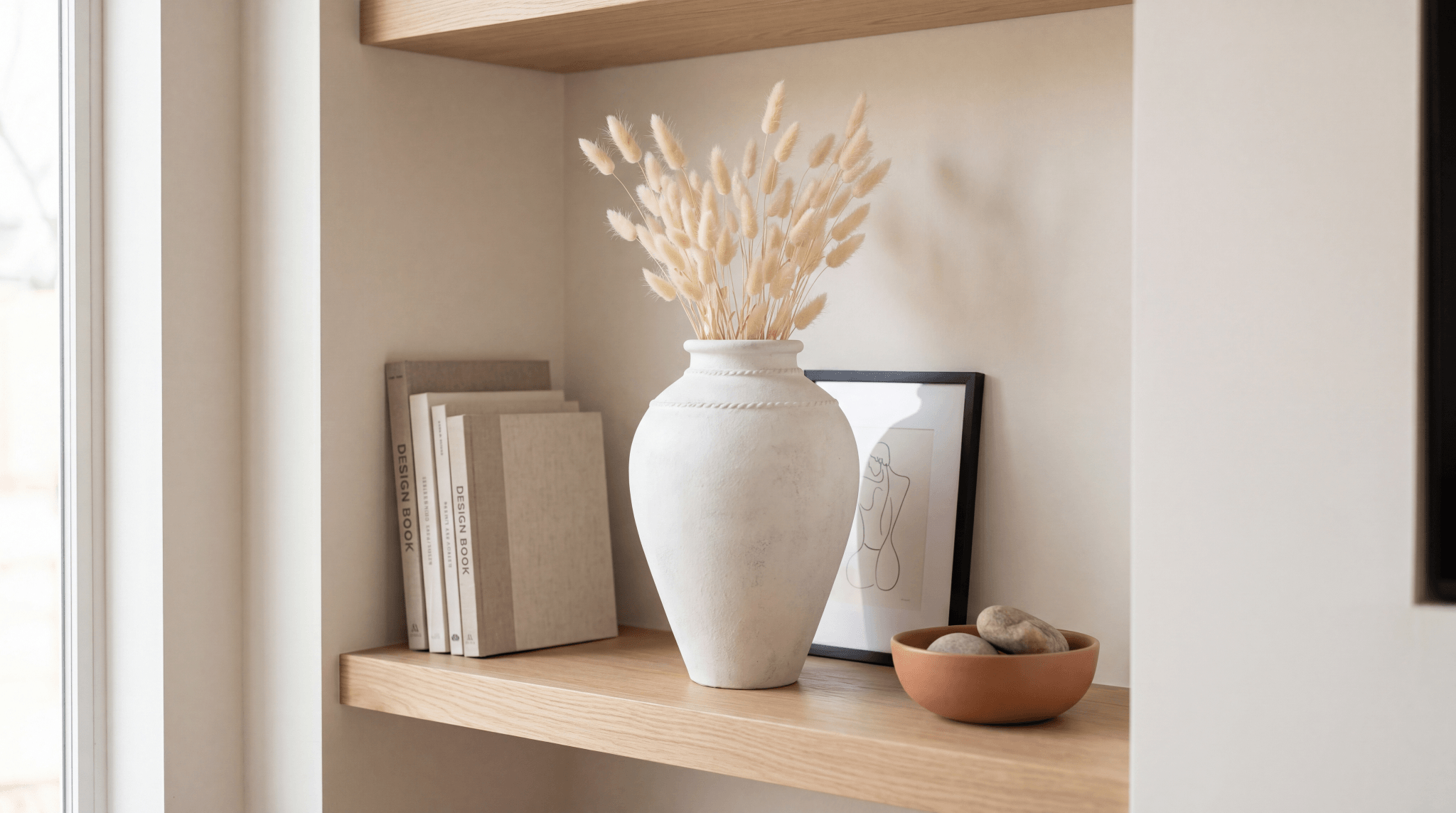
Once you know the categories, the material is your next call. A glass vase for home decor disappears into a styled shelf, while a ceramic vase for home decor anchors a console with weight.
Glass Vases and Jars
Clean, modern, and quietly versatile. Glass vases for home decor let you see stems and water, which adds movement to the arrangement.
Clear glass disappears when you want the flowers to lead, while colored or smoked glass becomes a sculptural piece in its own right. You can layer different shapes without them visually competing.
Ceramic and Porcelain
Durable, weighty, and full of character. A ceramic vase for home decor brings warmth that glass cannot match, especially in handmade or hand-glazed finishes.
You will find ceramics in nearly every color, from soft cream to deep midnight, and in matte or glossy finishes.
Porcelain reads more refined and suits classic interiors, while artisanal ceramic feels right at home in modern, organic, or boho spaces. According to Britannica, pottery is one of the oldest decorative arts, with earthenware dating back about 9,000 years, which is part of why ceramics still feel timeless in your space today.
Metal Vases
Bold and architectural. Brass, brushed nickel, and matte black metal vases pair best with contemporary and industrial interiors, where their reflective or rough surfaces add tension to the softer materials in your room.
Wood and Natural Materials
Warm, earthy, and grounded. Wood, woven, and natural-fiber vessels feel right in rustic, boho, and Japandi spaces. Most work as sculptural pieces rather than functional flower holders, since the materials are not always water-tight.
The same logic applies to other big pieces in your home, where frame, fabric, and scale matter as much as material and proportion do when picking your vases and jars.
How to Choose the Right Size and Shape
Scale is where most beginners stumble. A beautiful vase set on the wrong surface looks awkward, no matter how well-made it is. Use these rules to keep your proportions clean:
- For tabletop pieces, your vase should be no taller than two-thirds the height of the tallest nearby object, including lamps and frames.
- For floor vases, give yourself at least 18 inches of clearance on either side so the piece reads as intentional rather than crammed in.
- For floral arrangements, the stems should be 1.5 to 2 times the height of the vase. This ratio keeps blooms evenly distributed throughout the vessel.
Shape matters too. Tall, narrow vases visually lengthen a space, which is especially helpful in low-ceilinged rooms. Wide, bulbous shapes ground a surface and balance taller objects nearby.
Matching Vases and Jars with Interior Styles
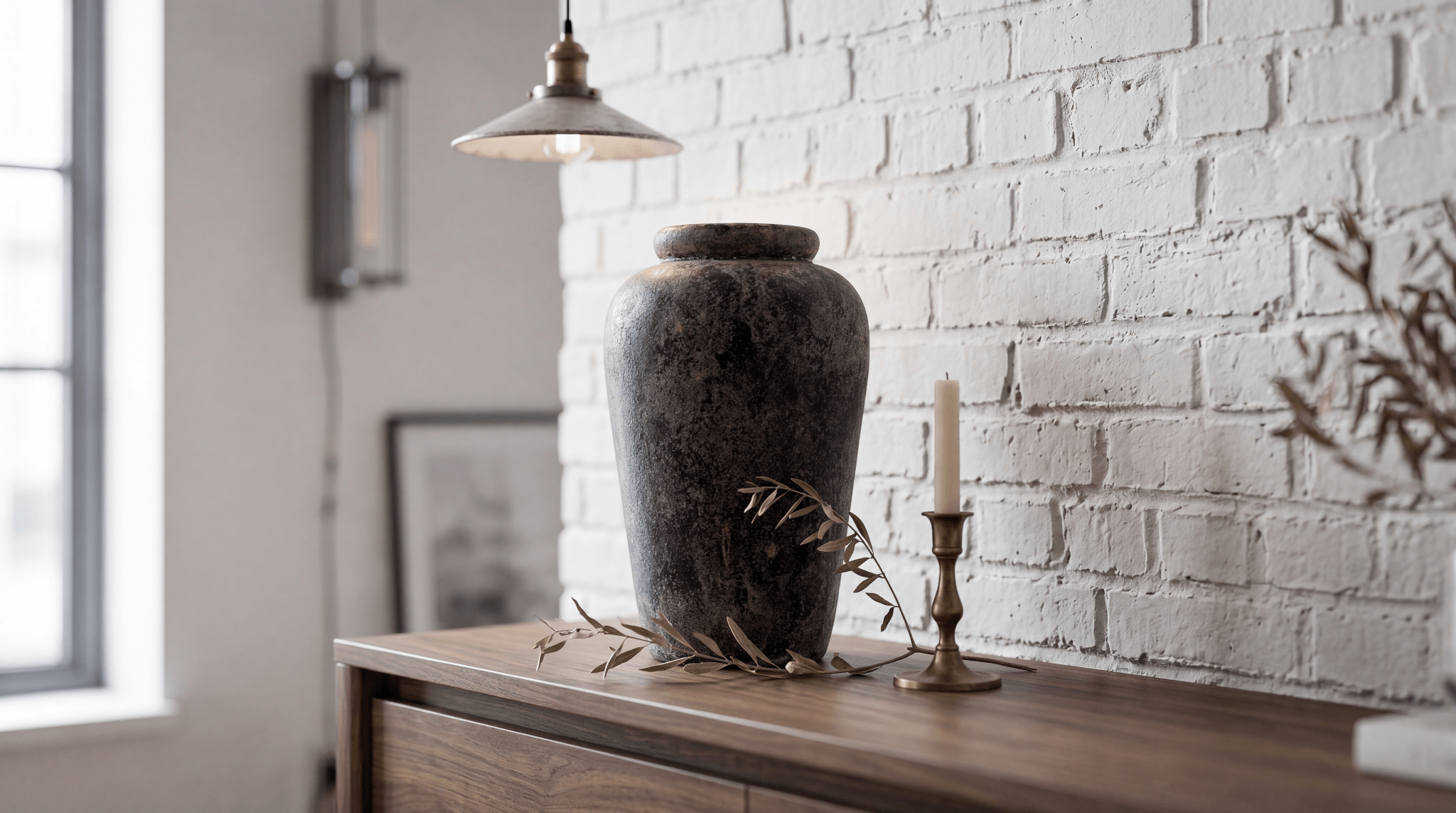
After material, the next layer is style. The vases and jars you bring home should reinforce your room’s mood, not fight it. Mismatched pieces create visual noise, while well-paired ones make the whole space feel intentional.
That is why matching decorative jars and vases to your interior style matters more than chasing trends. The right pairing pulls a room together in seconds.
Modern and Minimalist
Look for clean silhouettes, neutral colors, and quiet finishes. Skip the heavy ornamentation. In this style, a single sculptural piece often does more work than a cluster of busy ones, so let one vase for home decor carry the moment.
Boho and Rustic
Texture is everything here. Hand-thrown ceramics, woven jars, terracotta, and uneven glazes all work beautifully together. You can mix shapes more freely, too, since the style invites collected, lived-in arrangements that feel gathered over time.
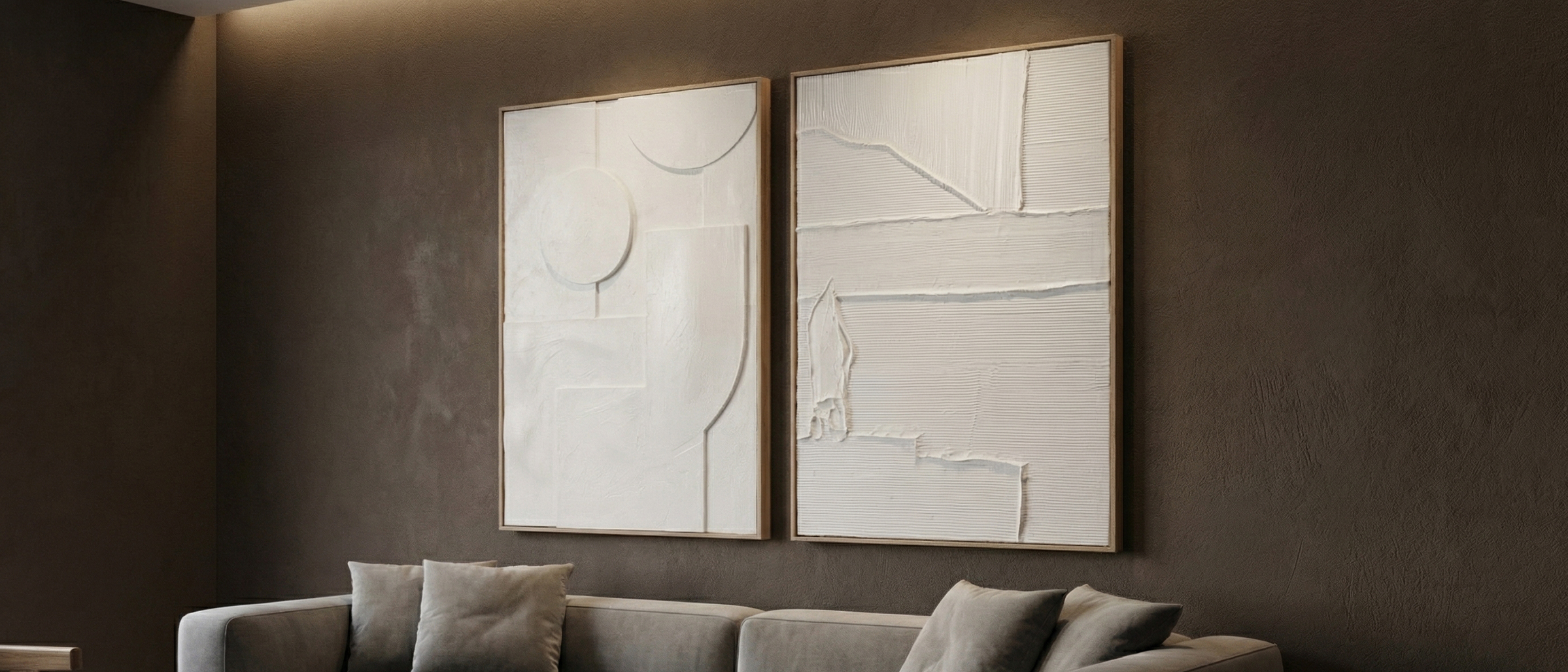
Since boho leans on the wall-and-shelf interplay, your vases and jars rarely sit alone. Pieces like abstract wall art on canvas carry visual weight above, while organic, textured vessels balance the eye on the surfaces below.
Classic and Traditional
Glossy finishes, symmetrical pairs, and elegant silhouettes lead the way.
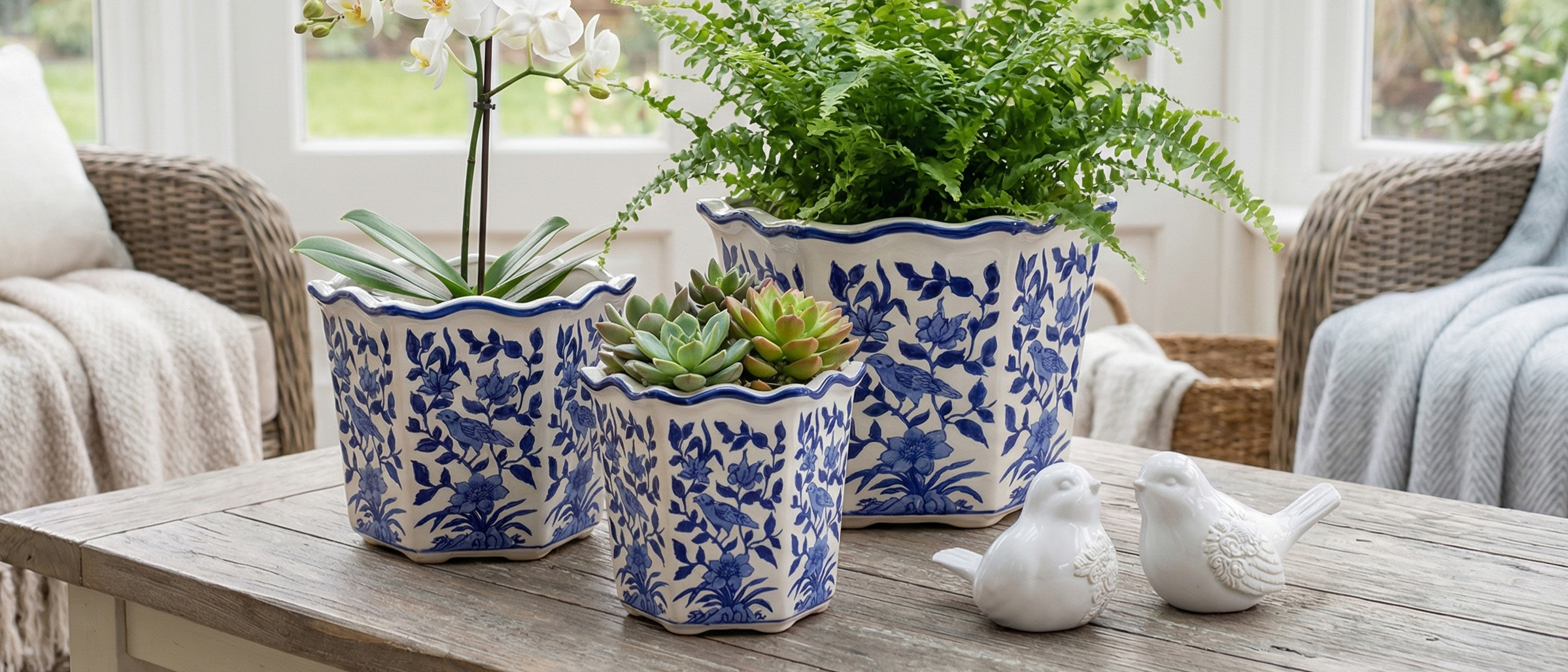
Think porcelain, deep cobalt blues, and soft gilded accents. Pairs work especially well on consoles and mantels, where you want your decorative jars and vases to mirror each other and frame what sits between them.
Industrial and Contemporary
Metal, matte black, and concrete-look ceramics anchor industrial spaces beautifully. Look for vases with structured lines and intentional weight. The contrast between hard surfaces and soft botanicals is what brings your room to life.
Color and Finish: What Works Best
Color is your fastest tool for shifting a room’s mood, and finish does similar work behind the scenes. Here is how each plays out:
- Neutrals (white, cream, soft black) blend with most palettes and let flowers lead.
- Bold tones become statement pieces that anchor a shelf or table.
- Glossy finishes reflect light and read polished.
- Matte finishes absorb light and feel quiet.
When building a vase for home decor collection, keep two or three neutrals as your base and rotate bolder pieces by season.
Where to Place Vases and Jars in Your Home
After color and finish, placement is what turns your vases and jars from beautiful objects into intentional design choices. The same piece reads entirely differently depending on where you put it, so the room you place it in matters as much as the piece itself.
Living Room
Coffee tables, console tables, and built-in shelves all welcome vases and jars.
For coffee tables, keep heights low so they do not block sightlines across the room. Built-ins look best with grouped pieces of varying heights, while console tables behind sofas come alive with one taller vase paired with a smaller object.
Pieces like home decorative accents help you balance vases with sculpture, books, and lighting on the same surface.
Dining Area
Centerpieces are where your home flower vase earns its keep. Keep arrangements low enough that diners can see across the table, or go very tall (above eye level when seated) so they do not interrupt sightlines.
The awkward middle height is the one to avoid.
Bedroom
Soft, smaller pieces work best here. A bud vase on a nightstand or a single ceramic piece on a dresser keeps the room calm without crowding your visual field.
According to an Int J Environ Res Public Health study, even small natural elements like indoor plants and fresh flowers can improve relaxation, reduce stress, and support better sleep, which is why your bedroom rewards quiet decorative jars and vases more than bold ones.
Entryway
Make a statement. Your entryway sets the tone for your home, so taller floor vases or sculptural pieces work beautifully here. Pair them with a console, a mirror, and a single light source for a layered look you can refresh seasonally without replacing the anchor pieces.
How to Style Vases and Jars Like a Pro
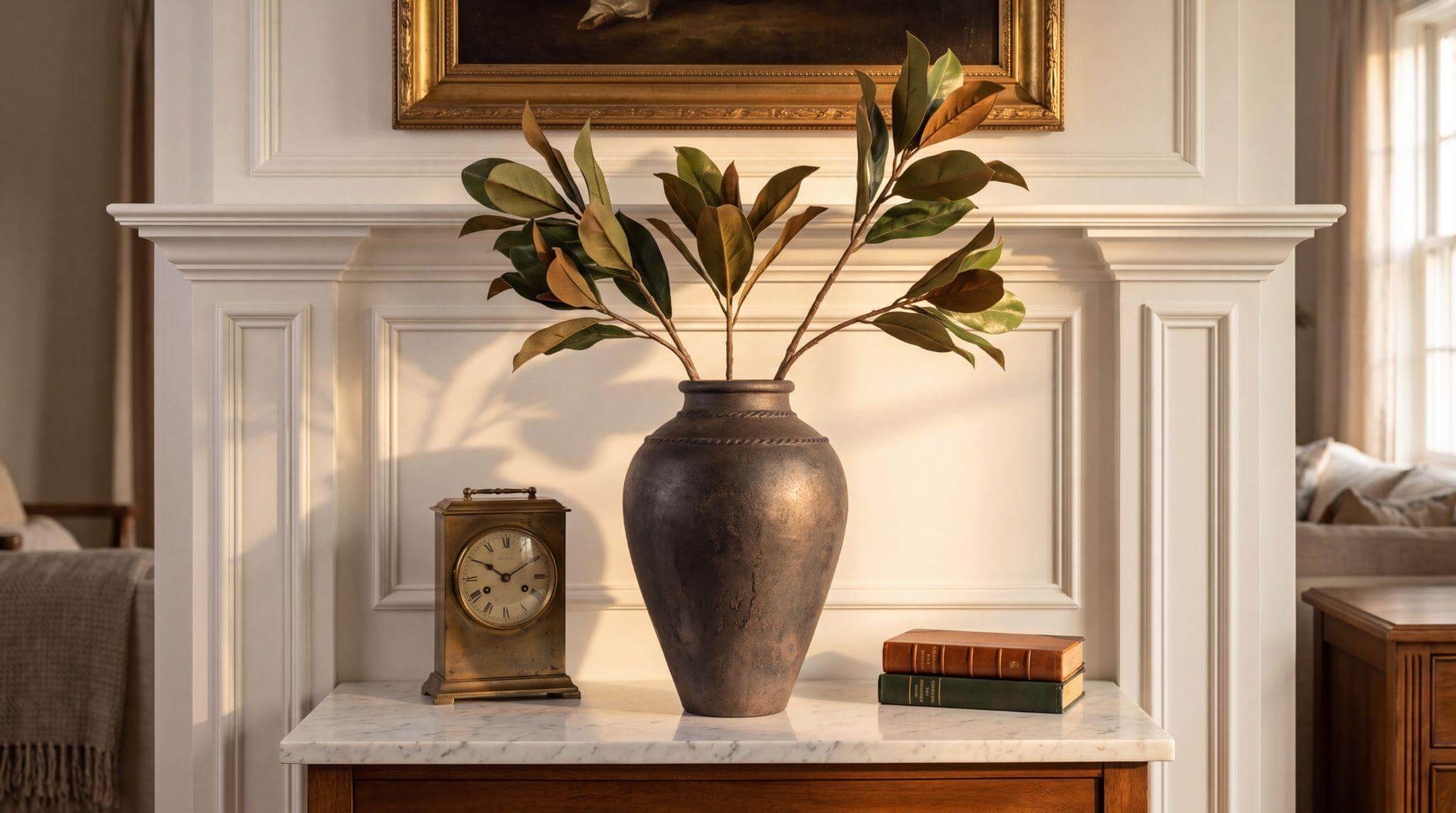
The way you arrange vases and jars matters as much as which ones you pick. A few small principles will give your styling a polished, intentional feel, no matter the room you place them in.
With Flowers and Greenery
Match your arrangement to the vase shape, since the vessel sets the rule for what fits inside.
- Wide-mouth ceramic vases call for full, structured arrangements.
- Narrow glass vases look best with single stems or thin clusters.
- Mixed dried and fresh stems add texture without weekly maintenance.
Layering and Grouping
Odd numbers feel more natural to the eye than even ones, which is why the rule of threes carries across landscape and interior design alike. To put it to work in your space:
- Group two or three pieces of varying heights.
- Keep at least one shared element (color, material, or finish) to make the cluster read as cohesive.
- Avoid perfect symmetry, since the eye wants a little tension.
The same proportion logic shows up in trade publications that interior designers rely on for client work.
Using as Standalone Decor
Sometimes a single sculptural vase is enough.
A statement floor vase in your entryway corner or a striking ceramic piece on a side table can carry the styling on its own, especially when the vase or piece has an interesting form, texture, or color worth featuring.
According to House Digest, unusual shapes and one-of-a-kind silhouettes function as art objects in themselves, so the vase becomes the focal point rather than a backdrop.
Top 10 Vases and Jars for Your Space (Buyer’s Picks)
Across materials, scales, and styles, these ten Sagebrook Home pieces cover the most common decorating problems you will face.
You can mix and match them or use any one as the anchor for a new shelf or surface.
Vase/Jar #1: 30″ Terracotta Floor Vase, Ivory
When a corner feels empty but a piece of furniture would crowd it, this is the answer. The ivory terracotta brings warmth without competing for attention, which is why it works in almost every neutral palette.
- Best For: An entryway corner, an empty stretch beside a sofa, or any space where you want vertical interest at floor level.
- Key Features: Ivory terracotta in a warm, hand-shaped silhouette. Floor-scale presence that fills negative space without feeling heavy.
- Shop the piece: 30″ Terracotta Floor Vase, Ivory
Vase/Jar #2: 40″ Terracotta Floor Vase With Handles, Ivory
If your room has high ceilings or a soaring entryway, a 30-inch vase can feel undersized. This 40-inch sibling fixes that, since the extra height plus sculptural handles give your space the proportion it actually wants.
- Best For: A double-height foyer, a tall hallway, or any space where ceilings climb and standard floor vases get lost.
- Key Features: 40-inch ivory terracotta with sculpted handles. Statement scale that holds its own beneath tall ceilings or large-format wall art.
- Shop the piece: 40″ Terracotta Floor Vase With Handles, Ivory
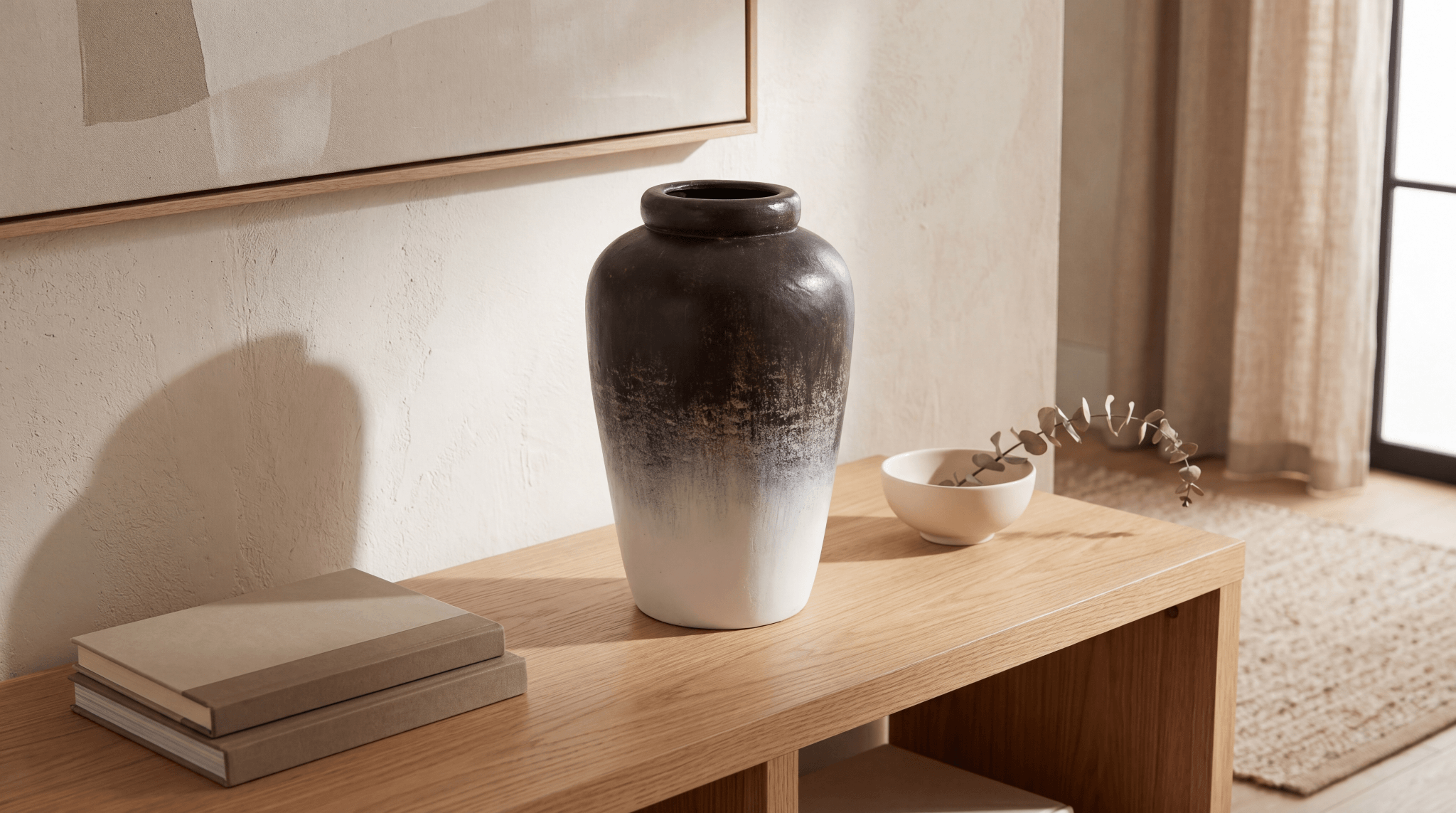
Vase/Jar #3: 16×10″ Terracotta Vase, Distressed Black
Black with patina is one of the hardest finishes to get right, since it can read flat or feel too new. This piece earns its character honestly, which makes it work in collected, layered rooms without feeling forced.
- Best For: A statement console, a dining buffet, or a shelf where you want texture and a touch of patina.
- Key Features: Distressed black finish on terracotta with a weathered, lived-in feel. Adds depth to neutral palettes without going moody.
- Shop the piece: 16×10″ Terracotta Vase, Distressed Black
Vase/Jar #4: 16×10″ Terracotta Vase, Brown Ombre
Ombre finishes do something straight colors cannot, since the gradient gives the eye somewhere to travel. The brown range here keeps things grounded while still adding visual movement to a styled surface.
- Best For: A console, a built-in shelf, or any space leaning warm-toned and earthy.
- Key Features: Terracotta with a soft brown-to-cream ombre finish. The gradient adds depth without competing with surrounding decor.
- Shop the piece: 16×10″ Terracotta Vase, Brown Ombre
Vase/Jar #5: 30″ Terracotta Floor Vase, Rustic Black
Black floor vases are rarer than ivory ones for a reason. They demand a confident space, and this one rewards that confidence with sculptural weight and a finish that beautifully grounds darker palettes.
- Best For: A modern or industrial-leaning room that calls for a darker, sculptural floor anchor.
- Key Features: Same 30-inch floor scale as the ivory version, finished in rustic black for spaces that lean toward a moodier or more contemporary aesthetic.
- Shop the piece: 30″ Terracotta Floor Vase, Rustic Black
Vase/Jar #6: 14″ Traditional Terracotta Vase, Terracotta
This is the workhorse of the collection. The classic terracotta tone pairs with almost everything, and the silhouette holds its own whether you fill it with eucalyptus, dried wheat, or nothing at all.
- Best For: A boho or Mediterranean-leaning shelf, an open kitchen ledge, or a relaxed mantle.
- Key Features: Classic terracotta finish with a balanced silhouette that works as a flower vase for home arrangements or styled empty.
- Shop the piece: 14″ Traditional Terracotta Vase, Terracotta
Vase/Jar #7: 12×8″ Terracotta Vase, Brown Ombre
Sometimes you need the same finish at a smaller scale, since not every surface can hold a 16-inch piece. This compact ombre version gives you the same warmth on side tables, nightstands, or open shelving where space is tighter.
- Best For: A nightstand, a side table, or a built-in shelf where you want texture in a compact silhouette.
- Key Features: Smaller-scale terracotta in a brown ombre finish. Sized for grouped arrangements and tighter surfaces.
- Shop the piece: 12×8″ Terracotta Vase, Brown Ombre
Vase/Jar #8: 12×10″ Rustic Terracotta Vase With Chain, Black
Sculptural details are what separate good vases from forgettable ones, and this one earns its keep with the chain accent alone. The piece feels intentional even before you style anything around it.
- Best For: A console, an entry table, or a shelf where you want a piece with sculptural detail.
- Key Features: Black terracotta body with a rustic chain accent. Adds character to neutral palettes and pairs well with nearby woven and wood textures.
- Shop the piece: 12×10″ Rustic Terracotta Vase With Chain, Black
Vase/Jar #9: 16×9″ Terracotta Textured Jug Vase, Gold
Metallic finishes on terracotta are unexpected in the best way. The gold here reflects light at a different angle than ceramic or glass would, which is exactly what some shelves need to come alive after dark.
- Best For: A shelf or console that needs a metallic accent, especially in spaces with lamp lighting or candles nearby.
- Key Features: Textured terracotta jug silhouette in a warm gold finish. A vase for home decor that doubles as a quiet light reflector.
- Shop the piece: 16×9″ Terracotta Textured Jug Vase, Gold
Vase/Jar #10: 18×9″ Terracotta Floor Vase, Black
Not every floor vase needs to be tall to make a statement. This shorter black silhouette anchors a corner without dominating it, which is what most rooms actually need when adding floor-scale decor.
- Best For: A modern living room corner, a hallway anchor, or a contemporary entryway where you want a low-profile floor piece.
- Key Features: Black terracotta in a compact floor-scale silhouette. Sized to anchor a corner without dominating the room.
- Shop the piece: 18×9″ Terracotta Floor Vase, Black
Common Mistakes to Avoid When Buying Vases and Jars
Even seasoned shoppers slip on these, since most of the mistakes feel small until you live with them. Catch these early as you build your collection:
- Buying too small for the room: Undersized vases and jars disappear on a shelf, so when in doubt, scale up.
- Ignoring water-tight construction: Some decorative pieces need a glass insert before you can use them as a real flower vase for home arrangements.
- Overcrowding the surface: Negative space matters as much as the objects themselves, so resist filling every inch of a console or shelf.
- Mixing too many materials in one cluster: Stick to two materials per grouping (for example, ceramic + glass), since more than that reads chaotic.
- Forgetting maintenance: Glass shows water marks, ceramics chip, and metal can tarnish, so pick materials your real life can support.
Why Choose Sagebrook Home for Vases and Jars
Sagebrook Home has built its reputation on wide selection, trend-forward design, and quality you can feel in your hands. The vases collection covers glass, ceramic, and metal silhouettes for every room, while the jars collection handles storage and decorative pieces from rustic to refined.
Beyond retail, the brand also serves designers and stockists, which means consistent stock, fast fulfillment, and a catalog deep enough to outfit entire projects. If you buy for a business, wholesale pricing makes the math work at scale.
So whether you are styling one shelf or sourcing for clients, you have a starting point that grows with you.
Ready to Style Yours?
Choosing vases and jars is less about rules and more about training your eye. Match material to mood, scale to surface, and shape to setting, and your styling stops feeling like guesswork.
When you treat these pieces as the foundation of your decor instead of afterthoughts, your whole room comes together with less effort. The right vase carries color, texture, and personality at the height where they register most.
Want to see the pieces in person before you commit? Visit a Sagebrook Home showroom to find the ones that best fit your space.
FAQs
What size vase should I choose for my coffee table?
For coffee tables, pick a vase for home decor no taller than two-thirds the height of nearby lamps or framed art. A 10 to 14-inch piece hits the right balance, anchoring the surface without blocking sightlines across the room.
Are glass vases or ceramic vases better for fresh flowers?
Both work, but they read differently. Glass vases for home decor showcase stems and water for minimal, modern arrangements, while ceramic vases for home decor hide stems and add weight, which suits fuller, structured bouquets best.
How many vases and jars should I display together?
Group decorative jars and vases in odd numbers, usually three or five, for the most natural look. Vary heights, share at least one material or color across the cluster, and leave breathing room so each piece reads clearly.
Where can I find quality flower vases for home use?
Sagebrook Home offers a wide range of flower vase for home options across glass, ceramic, and metal. The catalog covers bud vases to floor vases, with pieces that fit modern, traditional, boho, and industrial spaces alike.
How do I clean ceramic and glass vases without damaging them?
For glass, use warm water with a drop of dish soap and a bottle brush. For ceramics, hand-wash with mild soap and skip abrasive sponges that scratch glaze. Air-dry both upside down to prevent water spots.