Recent Products
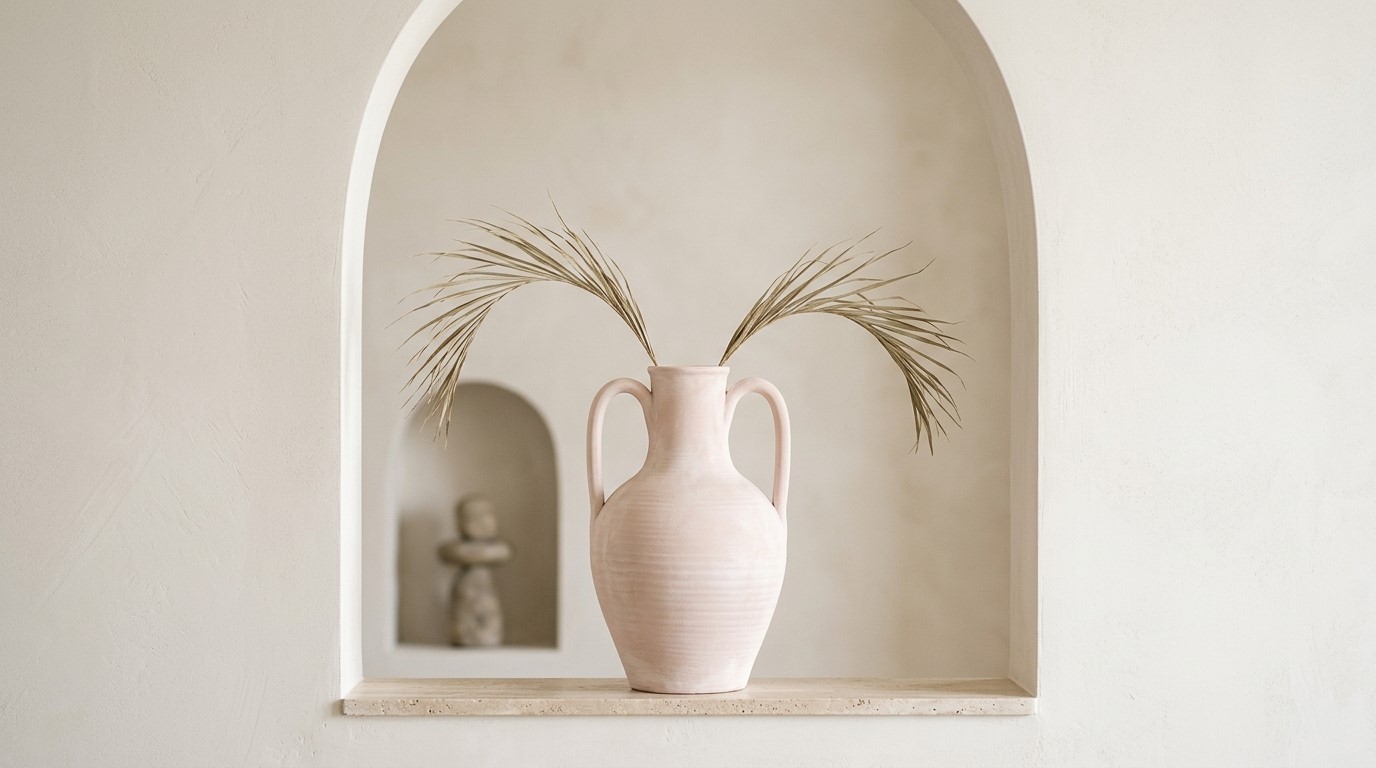
What is terracotta? It’s fired clay, and the orange comes from iron in the earth rather than glaze or paint. The name translates literally from Italian as “baked earth,” which describes the whole process: dig it up, shape it, and fire it until it hardens.
The material is rarely what confuses people. The word is. It names the clay itself, the terracotta color it borrows, and a decor look built on both. This guide separates them, so you know what you’re buying when you browse Sagebrook Home.
Terracotta is iron-rich earthenware clay fired at low temperatures, generally between 1,200°F and 1,830°F.
The terracotta meaning comes straight from Italian for “baked earth.” Because that firing stays low, the clay never fully vitrifies, so it stays porous, and that iron is what turns it orange in the kiln.
Left unglazed, the finished piece can range from pale ochre to deep reddish-brown, depending on the clay bed it came from. Here’s where it gets confusing, though. The same word names the clay, the objects made from it, and the terracotta color those objects inspired.
So when a listing says “terracotta vase,” check the material field rather than the color name.
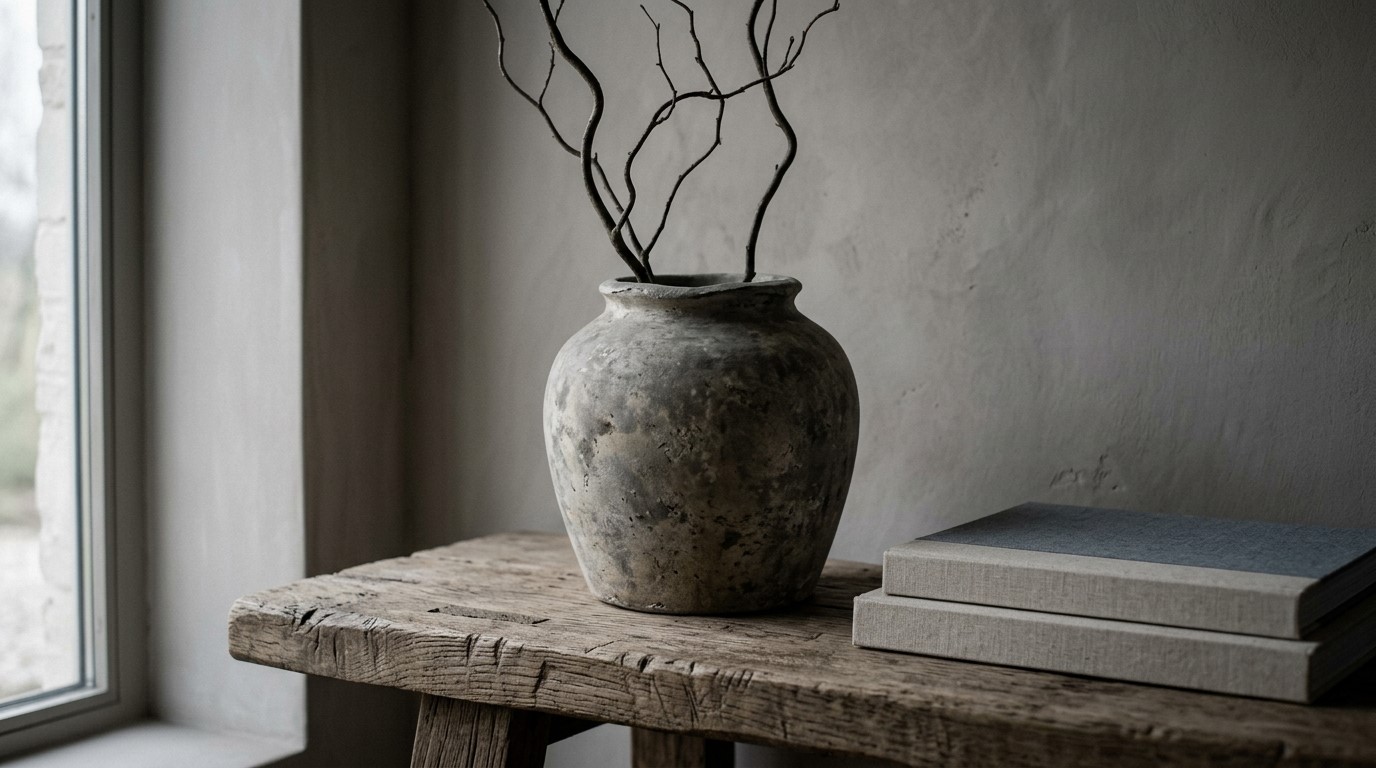
Terracotta clay is mostly natural clay carrying a high proportion of iron oxide, plus sand, quartz, feldspar, and whatever trace minerals sat in the ground where it was dug. During firing, that iron oxidizes and turns red.
No pigment or dye is involved, which is why the color runs through the whole body rather than sitting on the surface.
That through-body color has a practical upside. Chip the rim of a terracotta pot, and you simply expose more of the same red clay, so the damage barely shows.
Iron does the visible work here. A study by Gu and Ling in Science Progress measured 6.18% iron oxide in a red clay sample and traced the color to hematite that crystallizes during firing, while quartz and sand hold the shape steady as the body shrinks.
Raw terracotta clay rarely resembles the finished pot, tending toward a pale, washed-out tone rather than the deep red you picture. The color barely develops below 900°C.
Push past that threshold, and the terracotta color deepens fast, going from pale red at 800°C to a dark, saturated red by 1000°C. So a single batch can leave the kiln in more than one shade.
Firing temperature is what separates terracotta from the rest of the ceramics family.
The USC Pacific Asia Museum places earthenware firing at 650°C-1,000°C, stoneware at 1,150°C-1,300°C, and porcelain above 1,300°C.
Those few hundred degrees change everything. At stoneware and porcelain heat, the clay surface actually melts and turns glassy, sealing the body shut. Earthenware never gets there, so the particles fuse just enough to hold shape while a network of microscopic pores survives intact.
That surviving network is why your pot breathes, why it darkens when you water a plant, and why it will not hold water on its own. Potters deliberately close those pores, either by burnishing the surface or by adding glaze and firing a second time.
Terracotta is a type of ceramic, not a rival category. Any object made from clay and hardened by heat qualifies as ceramic, so a terracotta vs ceramic comparison is really a question of which ceramic you happen to be holding.
Terracotta sits at the low-fired, porous end of that family, and peer-reviewed research in Scientific Reports on 10,000-year-old ceramic beads from northern China places their firing around 500°C to 600°C, which shows you how far down the temperature scale that end of the family reaches.
| Material | Firing temp | Porosity | Durability | Typical use |
|---|---|---|---|---|
| Terracotta | 650°C to 1,000°C | High, absorbs water | Moderate, chips at edges | Planters, vases, tile, sculpture |
| Stoneware | 1,150°C to 1,300°C | Low | Strong, chip-resistant | Dinnerware, crocks, mugs |
| Porcelain | Above 1,300°C | Near zero | Very strong, brittle | Fine tableware, sinks, tile |
| Glazed ceramic | Varies by clay body | Sealed surface only | Depends on body beneath | Decor, dinnerware, wall tile |
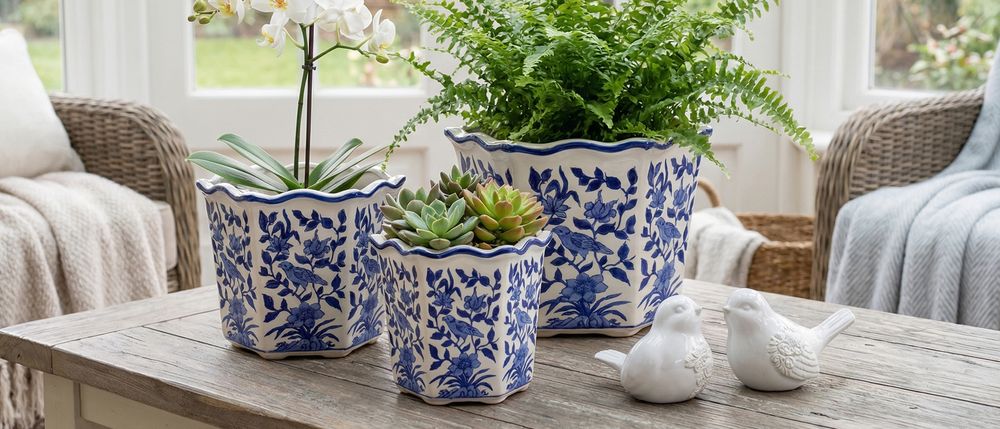
Glaze is the trap. It coats the surface without changing the body beneath, so a glazed terracotta planter still soaks up water wherever the glaze stops, and can crack in a freeze.
So judge a piece by what it must survive, not the label. Terracotta wins on warmth and price, stoneware and porcelain on strength and water resistance, which is why your ceramic home decor accents work best mixed.
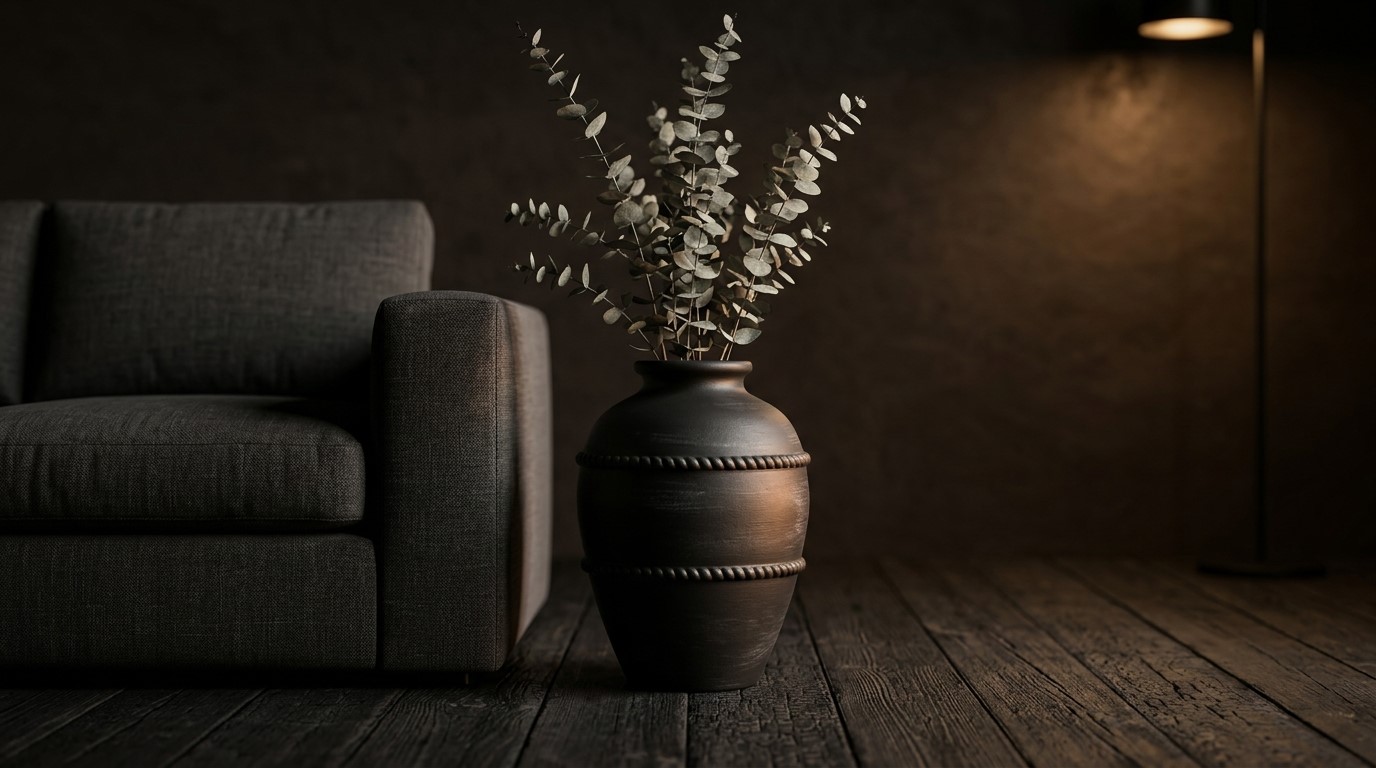
The terracotta color is a warm reddish-orange with brown undertones, named after the fired clay it describes.
Real terracotta spans a wide range, from pale peachy blush through burnt sienna to a deep brick red, and the exact shade depends on iron content, firing temperature, and how long the piece sat in the kiln.
That range is worth keeping in mind, since a swatch labeled terracotta on one site can look noticeably cooler or dustier than a pot you already own. Designers tend to treat terracotta as a warm neutral rather than an accent, which is why it shows up so consistently in seasonal forecasts.
The American Coatings Association’s 2026 color roundup records Sherwin-Williams building “reddish terracotta” into its collection of the year alongside stucco shades and burgundy, with other manufacturers naming clay, wood, and stone as their reference points for 2026.
Terracotta plays well with almost everything, though a handful of pairings do the heavy lifting in real rooms. If you are building a scheme around warm-toned pieces, these five are reliable.
Grouping warm-toned decorative accents in threes across a console or shelf gives these palettes somewhere to live without committing you to repainting anything.
Fired clay predates farming, writing, and cities. The Venus of Dolní Věstonice, a ceramic figure from what is now the Czech Republic, dates back roughly 29,000 years.
As reported by Smithsonian Magazine, archaeologists at the tomb of Qin Shi Huang unearthed a rare high-ranking commander, only the tenth found among the roughly 2,000 warriors excavated since 1974, out of an estimated 8,000 buried there.
Terracotta then ran through Greek workshops, Renaissance studios where clay caught gesture faster than marble, and nineteenth-century facades, where it clad buildings more cheaply than stone. Through all of it, the terracotta meaning never moved, so the pot on your shelf shares its process with an emperor’s army.
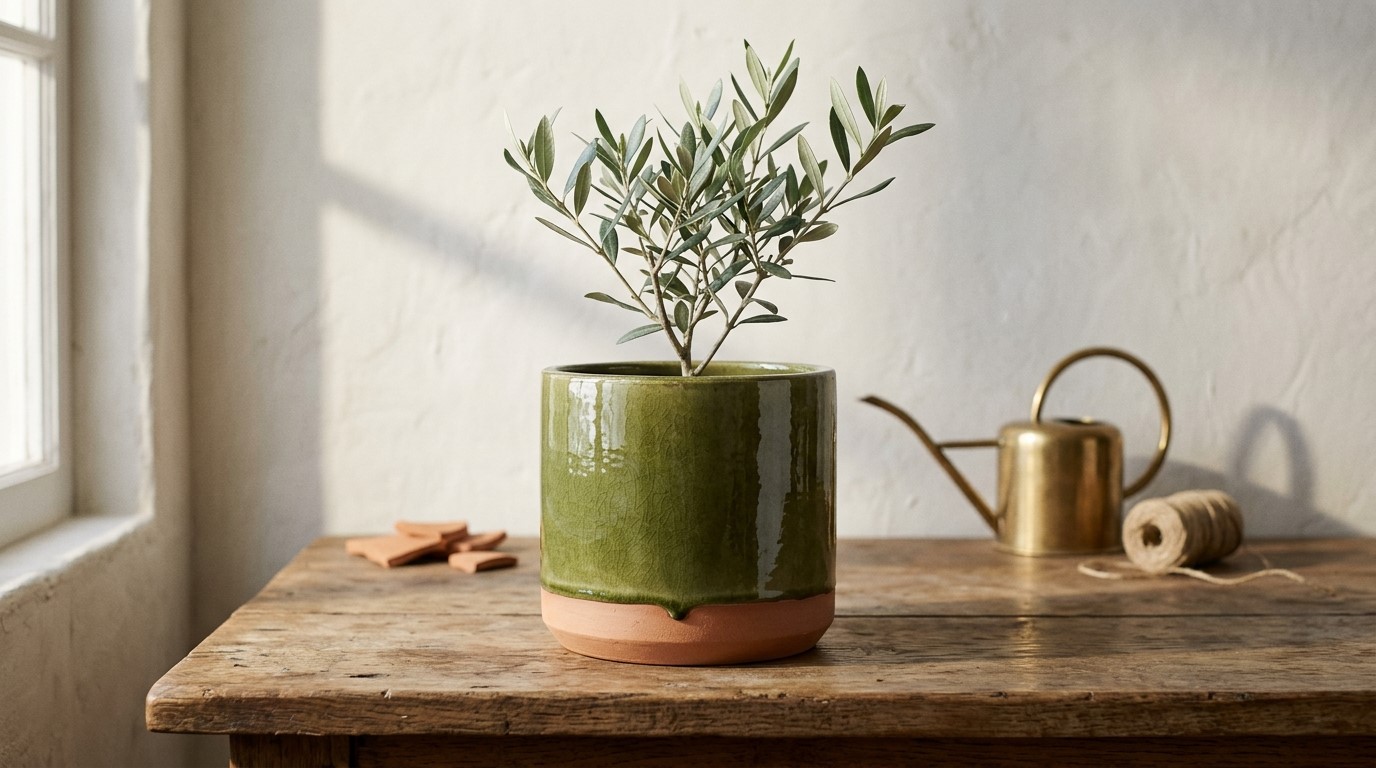
Terracotta shows up in your home as planters, decorative vessels, and tile or flooring. Each one leans on a different property: porosity, color, or texture. That pot on your shelf is cheap, warm, and it flatters nearly every palette you own.
What you now know about what terracotta is made of tells you which form to buy for which job.
So use porosity where plants need it, color where a room feels cold, and unglazed clay wherever you want something that looks right beside linen and wood.
Porosity is the point here. Because unglazed walls let moisture evaporate outward, clay pulls water away from the roots.
Virginia Cooperative Extension puts it plainly, noting terracotta pots “will tend to dry out the rootzone more quickly” no matter which potting mix you use, and recommends them for arid plants like cacti and succulents.
So match the pot to the plant:
One question decides it. Does this plant want to dry out, or stay evenly moist? Planters sized for your plants follow.
Unglazed clay does something glass and metal cannot. Its matte, slightly chalky surface absorbs light instead of bouncing it back, so a terracotta vessel reads as quiet even when it is large.
Three rules make a shelf work:
That last one does the most work. Contrast in finish makes both objects look chosen rather than collected, which you can see when fast-browsing our full range.
Terracotta goes structural at scale.
Saltillo tile from Mexico and Spanish clay pavers put it underfoot across warm climates, where the tonal variation between fired tiles is the selling point rather than a defect.
Curved barrel roof tiles shed rain and reflect heat, and plenty are still working after a century outdoors.
That sculptural quality scales down too. Architectural terracotta covers cornices, window surrounds, and entire facades, and the same visual language appears indoors in clay reliefs and sculptural wall decor sized for a real living room.
No. Terracotta is among the cheapest ceramics because the clay is common, and low-firing requires far less energy than stoneware or porcelain.
Plain unglazed pots run from a few dollars to modest double digits, while glazed, hand-thrown, and sculptural pieces climb well past that.
Three things move your price:
Nearly every care rule for terracotta traces back to one fact: the clay drinks whatever touches it. That is worth knowing before you clean, store, or fill a piece.
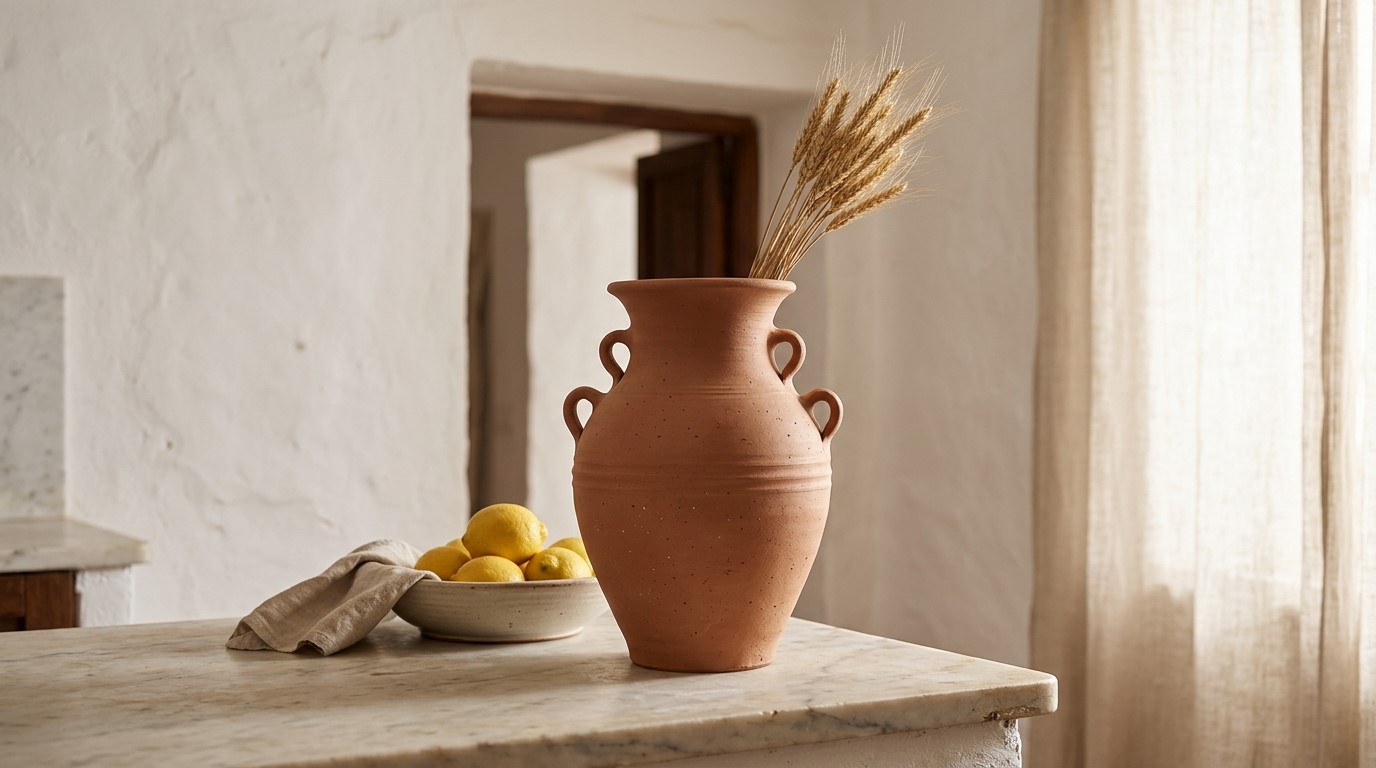
Check the material field, not the color name.
That single habit is the payoff of everything above, because what is terracotta splits three ways: the fired clay, the objects made from it, and the color that took the name. A vase called terracotta might be neither of the first two.
Sagebrook Home lists the material on every piece, so you can tell. Ask our team what fits your space, or find a showroom and feel the difference yourself.
Terracotta is fired earthenware clay, baked at low temperatures between roughly 650°C and 1,000°C. The name is Italian for baked earth. Because it fires cool, the clay never vitrifies, which leaves it porous, unglazed, and warm orange from the iron oxide running through the body.
Terracotta is made of natural clay high in iron oxide, mixed with sand, quartz, feldspar, and trace minerals from the ground it came from. No pigment is added because firing oxidizes the iron to hematite. That is why the color runs right through the piece.
The terracotta meaning comes straight from Italian for baked earth, which describes the process rather than a style. Today the word does three jobs at once: it names the clay, the objects fired from it, and the reddish-orange color those objects gave their name to.
Terracotta is a type of ceramic, not a rival to it. Terracotta vs ceramic is a temperature question: terracotta fires at 650°C to 1,000°C and stays porous, while stoneware hits 1,150°C to 1,300°C and porcelain goes higher, melting the surface glassy and watertight.
No. Unglazed terracotta is porous by design, so water passes slowly through the clay and evaporates off the surface. A food-safe or masonry sealer makes terracotta clay sufficiently watertight for vases and fountains, though it also reduces the breathability your plants rely on.
Not safely. Standard pots crack in freezing weather because absorbed water expands as it turns to ice, splitting the pot from the inside. Empty, dry, and store them under cover before the season turns. Frost-resistant clay fired hotter handles cold better, but nothing unglazed is immune.
That chalky film is efflorescence, a crust of mineral and fertilizer salts carried through the porous wall by water and left behind as it evaporates. It signals hard water or heavy feeding rather than damage. A stiff brush and a vinegar soak clear it.
Not quite. Red clay is the raw material dug from the ground, while terracotta is what that clay becomes after firing. Most terracotta starts as red or brown earthenware, though raw clay usually looks pale and washed out until the kiln deepens it.
Rarely, because the terracotta color falls within the warm neutral range, which anchors rooms rather than dating them. Paint forecasts keep cycling earthy reds back into rotation, and unglazed clay reads as texture more than trend, which gives it unusual staying power in any palette.