Recent Products
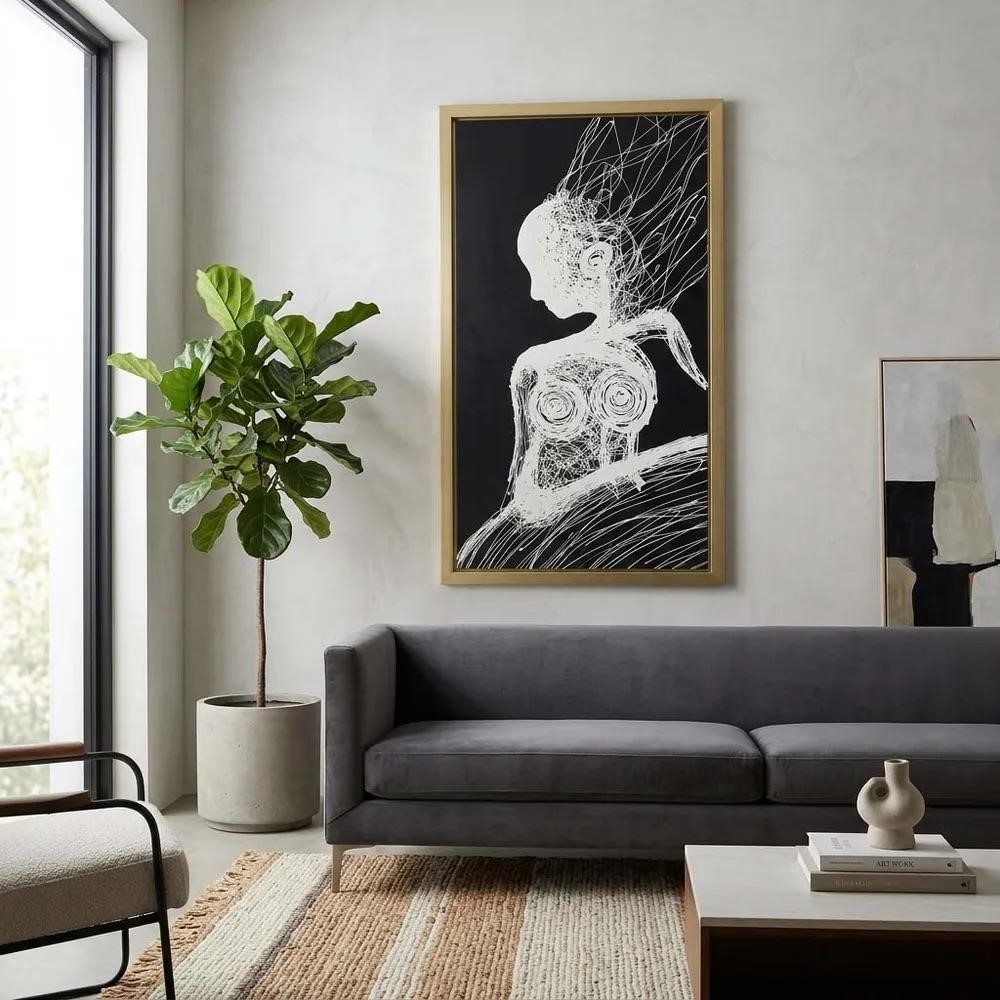
You buy the 16-by-20 print, hang it dead center, step back, and it looks like a stamp on an envelope. Almost everyone does this once. Learning how to decorate a large wall starts with a tape measure, not a shopping cart, because the fix is scale rather than quantity.
The working rule is two-thirds. Your arrangement should span roughly two-thirds the width of the furniture beneath it, which is why one oversized piece usually beats five small ones.
Sagebrook Home lists dimensions on everything, so you can size before you buy.
Scale decides it. Pick decor that spans roughly two-thirds the width of the furniture beneath it, then hang it so the center sits 57 to 60 inches off the floor.
From there, let one dominant piece lead while texture, dimension, or lighting fills in behind it. Every good large wall decor idea starts with those two numbers.
So grab a tape measure before you grab your wallet.
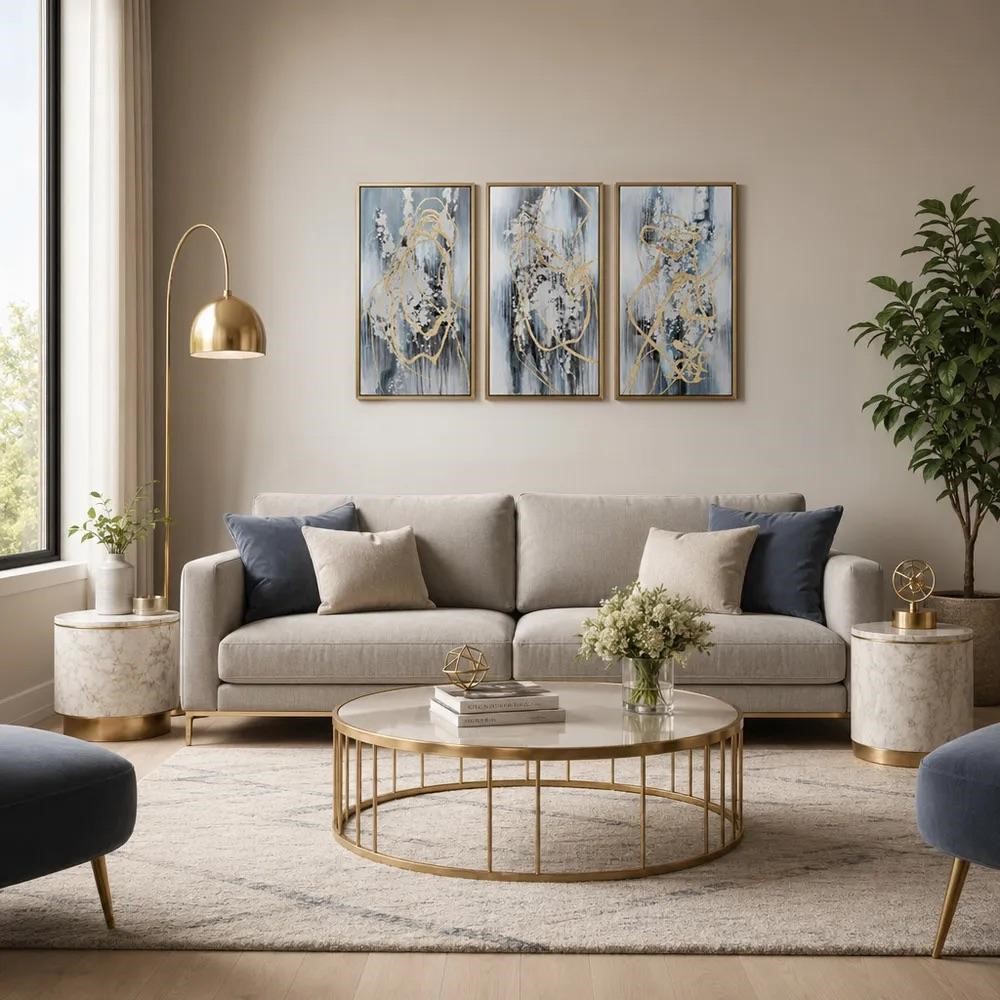
Every idea below works better once you know your numbers, and most questions about how to fill a large wall answer themselves the moment you have them. Grab a tape measure, note the wall’s width and height, the width of the furniture against it, and the distance from the floor to the ceiling. Three rules turn those measurements into decisions.
Your art should span roughly two-thirds the width of the furniture below it.
An 84-inch sofa wants about 56 inches of art. A 60-inch console wants about 40 inches. Go much narrower, and the piece reads as an afterthought, which is why oversized wall art solves these walls faster.
When nothing sits below, size to the wall instead and cover 60% to 75% of its width. That leaves margins your eye needs to read the arrangement as deliberate.
Worth knowing: a group counts as one piece. Five frames hung tightly across 56 inches work exactly like one 56-inch canvas.
Center your artwork 57 to 60 inches from the floor.
Museums work from a centerline rather than a top edge, and Smithsonian exhibition guidelines set wall labels at a 54-inch centerline as the optimum height for everyone, including seated visitors. Homes sit higher because you are mostly standing.
Tall walls tempt you to break this. You see eight feet of blank space and hang higher to fill it, which straddles the art between the furniture and the people below.
The fix runs upward, not higher. Keep your anchor on the 57-inch line, then add a second row above it.
Holes are permanent. Layouts are not, so settle yours before you commit.
These large wall decor ideas run from the simplest and highest-impact to the more involved. Most rooms need only one or two of them, so read for the approach that matches your wall rather than trying to combine everything.
The simplest answer is usually the best one. A single large canvas, framed print, or panel does what a dozen small frames cannot: fill the space without asking your eye to assemble anything.
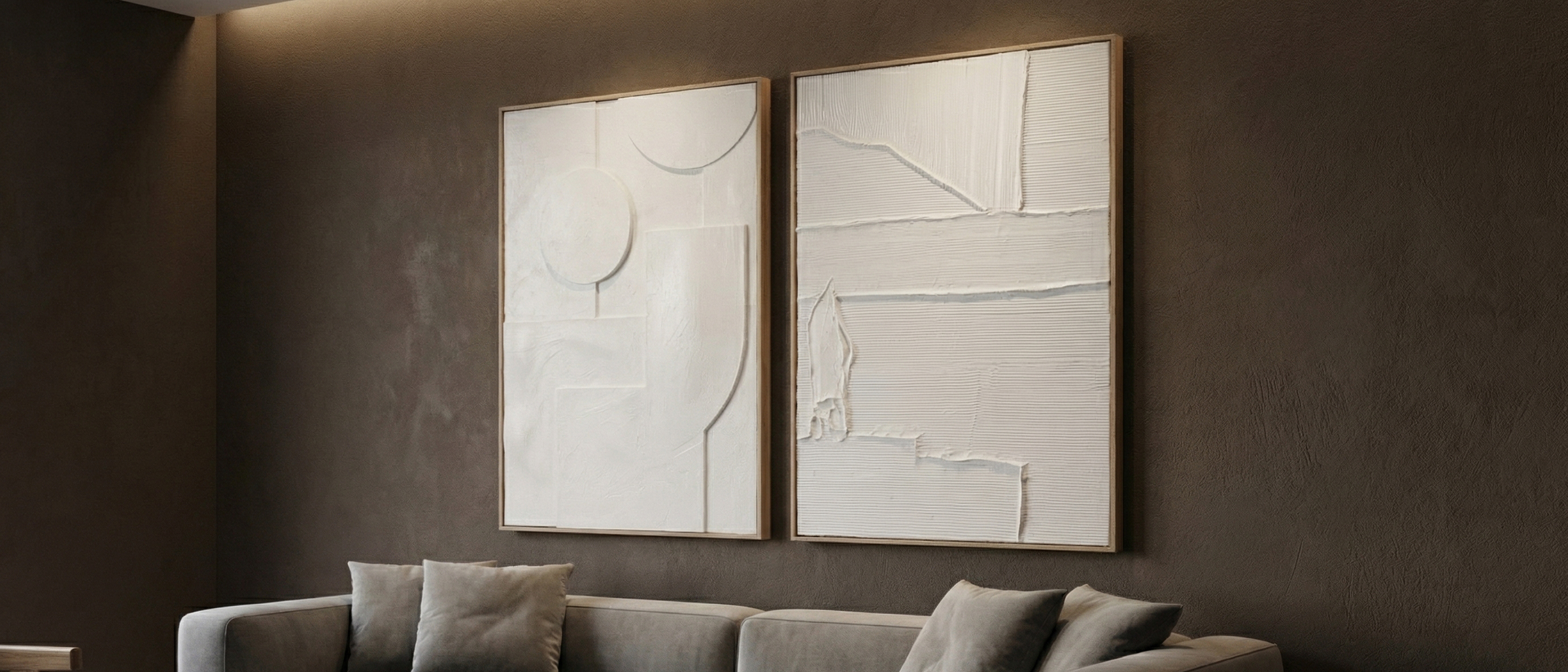
Size it to two-thirds the width of the furniture below, or 60% to 75% of the wall when it hangs alone. Browsing wall art at 60 inches and up shows you fast how different a room reads once the art matches the architecture.
Big walls forgive bold choices far more readily than small ones do, so oversized wall art tends to be the safest expensive decision you can make.
Identical frames, identical mats, identical spacing, arranged in a clean rectangle. The grid works because its outer edge forms a single large shape, so nine 16-inch frames function visually as a single 56-inch piece.
Consistency is the whole job here:
A grid forgives nothing. One frame hung a quarter inch off pulls the entire arrangement out of true.
The looser cousin of the grid. Mixed frame sizes, mixed finishes, mixed subject matter, all orbiting a central anchor that carries the visual weight. Salon walls feel collected rather than purchased, which suits older homes and rooms with some personality already.
Give yourself one unifying thread so the mix reads as deliberate. A repeated frame color, a consistent mat width, or a shared palette across the art will all do it.
Then lay the whole arrangement on the floor and photograph it before a single hole goes in.
Mirrors earn their place twice over. They cover a serious amount of square footage and push light deeper into the room, which matters most in spaces with one window or a north-facing exposure.
Pay attention to what the mirror actually reflects, because that reflection becomes part of your decor. One facing a window doubles your daylight. One facing a cluttered hallway doubles the clutter.
Oversized mirrors at 72 inches and taller suit stairwells and tall-ceilinged rooms particularly well.
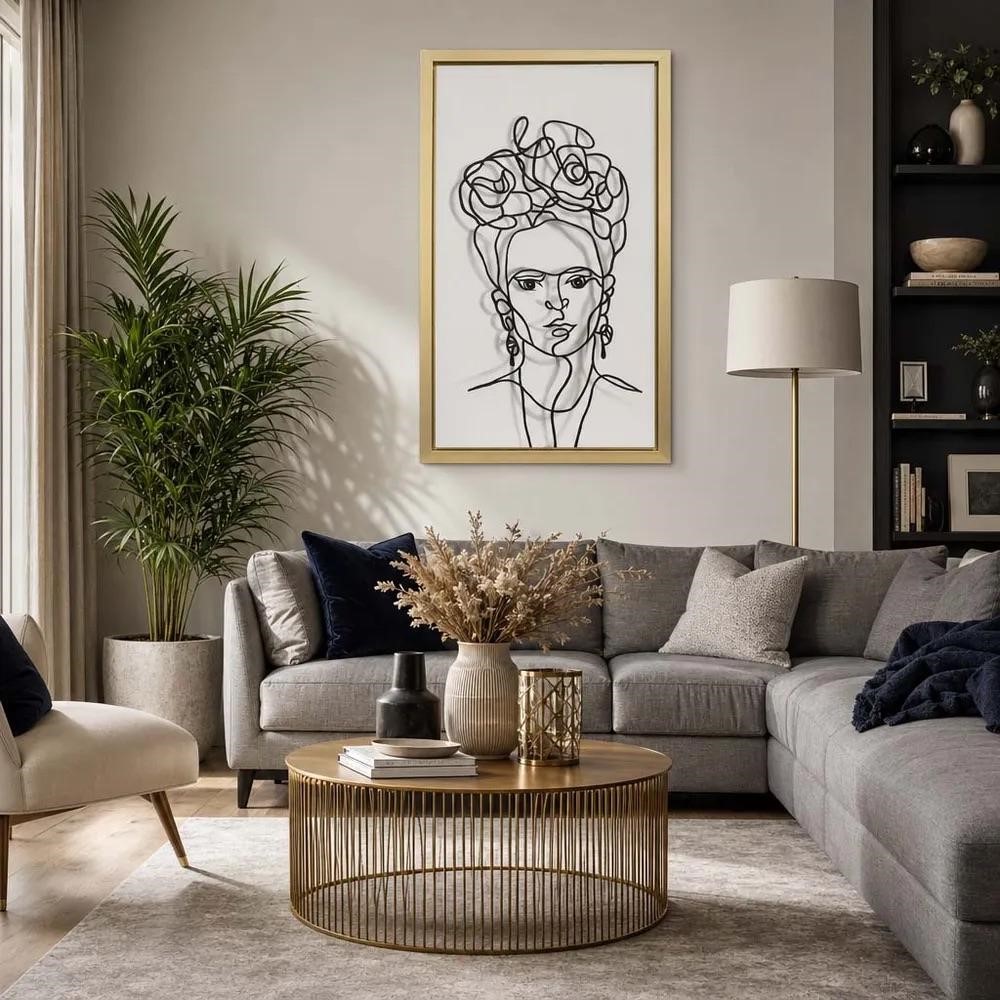
Textiles soften rooms full of hard surfaces, and they quiet them measurably.
A study by Caballol and colleagues in Acoustics tested engineered acoustic textiles and found pleated samples absorbed more sound than flat ones across nearly the entire frequency range, with the best flat sample peaking at 0.87 at 630 Hz.
Those were specialist polyester fabrics, so your linen tapestry will not match those numbers. The pleating finding still transfers, though: a textile hung with folds and body absorbs more than one stretched flat.
Tapestries also cover more wall per dollar than framed art. Hang them from a rod, a dowel through a top sleeve, or a clip rail if you want to swap seasonally.
Art split across two to five panels stretches across a wide wall while still reading as one work.
Horizontal spaces above a sofa or bed suit the format especially well, since a set can span 70 or 80 inches without any single panel becoming unwieldy to hang.
Keep the gaps tight, ideally 2 inches or less, because wide spacing breaks the illusion and turns your unified piece back into separate objects. Hang the panels along a shared centerline and check each with a level as you go, since a triptych exposes drift immediately.
Panel sets also cost less than a single canvas of the same width, making them a practical option for oversized wall art.
Shelves turn a static wall into something you can change whenever the mood strikes. Two or three long shelves stacked with framed art, ceramics, books, and trailing greenery give you depth that flat art cannot.
Vary the heights of what you place there and leave real breathing room between groupings, since a packed shelf reads as storage rather than display.
Mixing wall shelving and storage with a few hung pieces above or beside creates the layered look large walls handle so gracefully.
Flat art on a big surface can leave a wall feeling static no matter how large the piece. Metal forms, carved wood panels, and woven discs project outward, catch light on their edges, and cast shadows that move as the sun does.
Dimension does what scale alone cannot: give the wall a reason to look different at 9 a.m. and 6 p.m.
Grouping dimensional wall decor in varying diameters across a wide span covers ground quickly while keeping the arrangement lively.
Living texture brings a wall to life in a way no printed image manages. Be honest with yourself about the conditions, though.
Illinois Extension houseplant light guidance puts low-light conditions around 75 foot-candles, which you get a few feet from a north window or 15 to 20 feet from a south-facing one, so a wall far from any glass needs plants chosen for that reality.
Practical realities to plan around:
Board-and-batten, slat wood, picture molding, or a color-blocked panel treat the wall itself as the decor. Rather than hanging objects on a blank surface, you give the surface texture and rhythm of its own, which often means you need far less on top of it.
The tradeoff is real. This route takes a weekend, some tools, and a conversation with a landlord if you rent. What you get back is the highest impact per dollar on this entire list, since paint and trim cover enormous square footage cheaply and permanently change how the room reads.
Plenty of households are making that same call, with research from the Harvard Joint Center for Housing Studies putting American spending on home improvements and repairs on track to reach $518 billion this year.
Large walls often look empty at the bottom, not the top. Nothing grounds them at floor level, so the art above relates to nothing and appears to hover. A bookcase, tall console, credenza, or hutch fixes the underlying problem rather than the symptom.
Once furniture occupies the lower third, your art only needs to relate to that piece instead of the whole wall. The two-thirds rule kicks in immediately, and a much smaller piece suddenly looks correct.
Among all the large wall decor ideas here, this is often the cheapest, since you may already own the furniture.
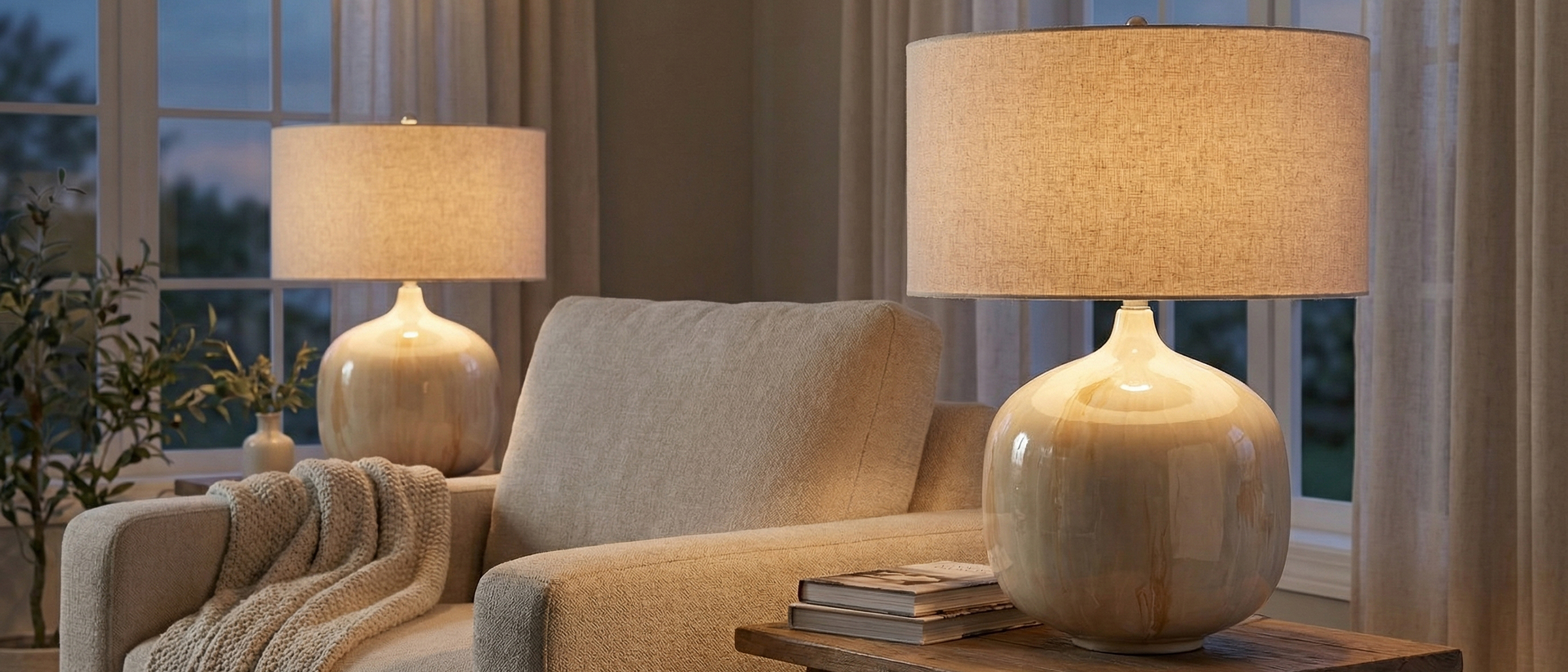
Lighting is decor that happens to be useful. Sconces flanking a large piece, a picture light above it, or a pair of oversized fixtures spaced across a wide span all pull the eye horizontally and add warmth after dark.
Check the CRI before you buy. Department of Energy guidance sets 80 or higher as the residential benchmark, and a low-CRI bulb will visibly flatten the colors in whatever art you just spent money on.
Renters have options too, since plug-in sconces and battery picture lights skip the electrician entirely. Pairing accent lighting with art gives you a wall that works in daylight and in lamplight.
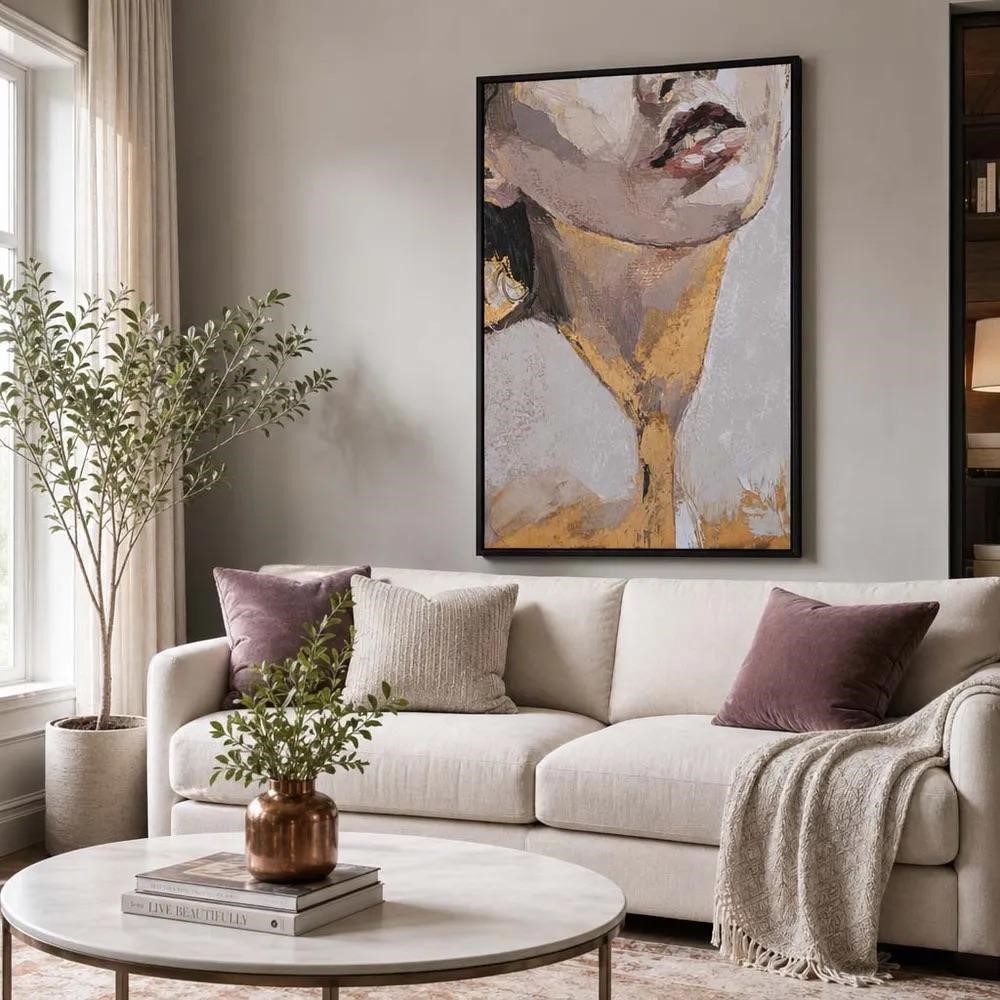
Most large wall decor ideas fail for predictable reasons. Each of these has a straightforward fix.
Work through that list before you buy anything, and you will have solved how to fill a large wall in your particular room, since the fixes cost nothing beyond a little measuring.
Housing now accounts for 33.4% of the average American household’s spending, and Bureau of Labor Statistics data show it was the only major category to rise significantly in 2024, reaching $26,266. So the decorating budget is usually what’s left over.
Here’s how to fill a large wall without a large invoice:
That last one matters most. A wall assembled slowly beats one bought in a single afternoon nearly every time.
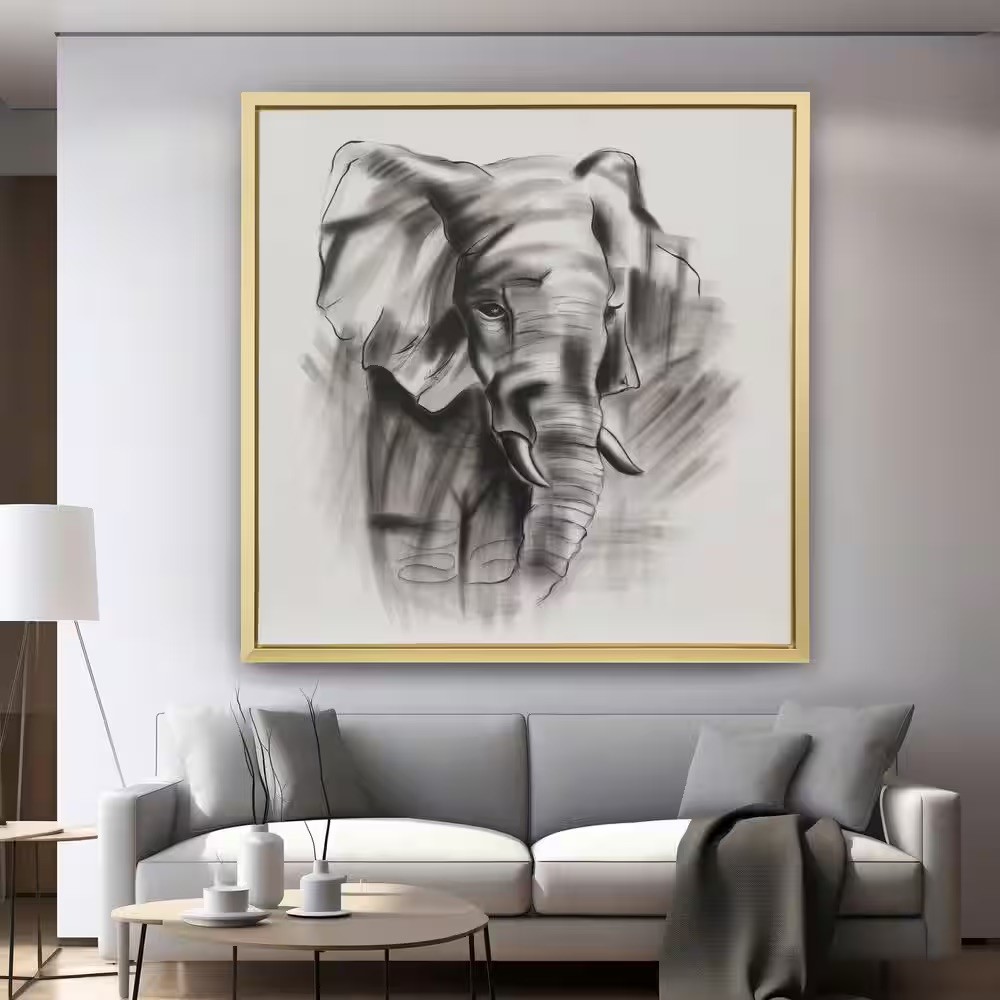
Go stand in front of it. Nearly every large wall that reads as empty is holding art that’s too small, so start by measuring the furniture underneath and multiplying by two-thirds. That number tells you what to shop for.
Sagebrook Home publishes dimensions on every piece, which makes that math easy. Ask our team what suits your space, or find a showroom if you’d rather handle things first.
Scale the decor to two-thirds the width of the furniture below it, then hang it with the center 57 to 60 inches from the floor. How to decorate a large wall is a sizing problem before it’s a shopping problem, so measure the room first and buy second.
Add dimension rather than quantity. Knowing how to fill a large wall often means textiles, floating shelves, sculptural pieces, or an architectural treatment like board and batten, since these cover more surface per dollar than framed prints and give the wall depth that flat art can’t.
Tapestries, leaning oversized mirrors, plug-in sconces, and command-strip gallery walls all work without permanent damage. The strongest large wall decor ideas for renters cover serious square footage from a few anchor points, so you leave three holes behind instead of thirty.
Center the piece 57 to 60 inches from the floor, which sits at average standing eye level. On very tall walls, resist raising that line. Add a second row above instead, so the arrangement grows upward while your anchor piece stays connected to the room.
Center it over the furniture. Your eye reads the sofa, bed, or console and the art above as one unit, so alignment with the furniture matters more than alignment with the wall. Center on the wall only when the space below stays completely empty.
Odd numbers of five, seven, or nine read best, though the count matters less than the outer shape. Measure the footprint you want to cover, arrange pieces to fill roughly that rectangle, and keep 2 to 3 inches between frames so the group holds.
Yes, and you should. Negative space gives an arrangement room to breathe, while covering every inch reads as clutter. Aim to fill roughly two-thirds to three-quarters of the usable surface, leaving margins at the edges so the composition has a visible boundary.
Anything spanning less than half the width of the furniture below will look undersized. Above an 84-inch sofa, a piece narrower than roughly 42 inches disappears. Oversized wall art at 56 inches or wider fixes it, and a tightly grouped arrangement counts as one piece.